My parents built a farm. I added AI to it.
My parents run a poultry farm.
I always look forward to our conversations about it. This is unfamiliar territory for me, but those conversations help me understand what my parents deal with day to day. Every so often, I find useful ways to help.
We recently spoke about how they keep track of the farm’s core numbers. From this conversation, three things became clear to me:
- Managers already sent farm updates through WhatsApp.
- Those numbers helped my parents understand what was happening across the farm.
- Collating the data was still manual. Someone had to find each report and copy the numbers into a sheet.
Baálẹ̀
So I built Baálẹ̀ with a simple principle in mind:
Good technology should fit and improve existing systems, not force people to abandon them.
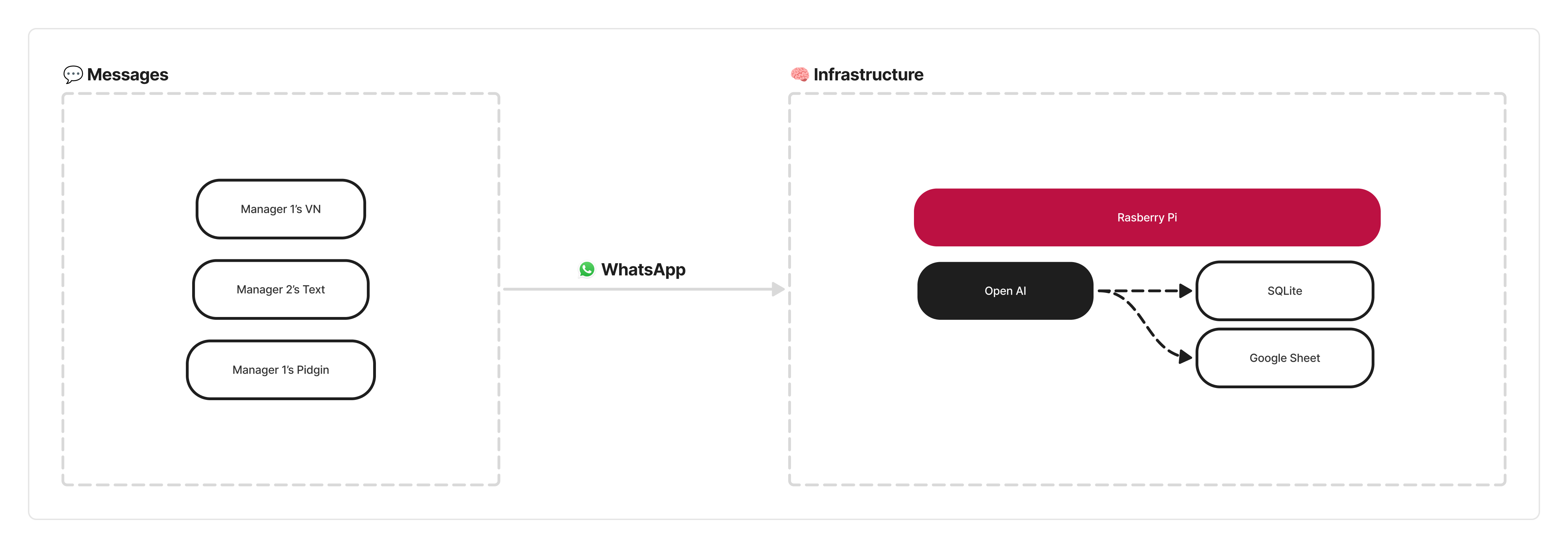
Baálẹ̀ sits in the farm’s WhatsApp group. A manager can tag it in a text report or reply to its reminder prompts. It uses an AI model to process the information, and turn the input into structured farm records.
The flow is simple.
Early learnings
I built the first useful version over a weekend. It could understand a report and save it. That part came together quickly. The following weeks taught me the rest:
- Messages can arrive twice.
- People correct numbers after sending them.
- Parts of the process can fail halfway through.
- Managers do not always report in the same way. They might type or send a voice note in English or Pidgin.
Each case can turn a normal report into a missing or incorrect farm record.
Baálẹ̀ had to grow around those realities. It now handles duplicates, keeps reports in order, transcribes voice notes, routes corrections to the right record, and preserves the farm record even when Google Sheets is unavailable.
The MVP was the easy part. Supporting the untidy ways real reports arrive became the work.
My parents now have one less manual task to think about. A live business spreadsheet, and automated summaries that they check on. They can now double down on growing the business efficiently.
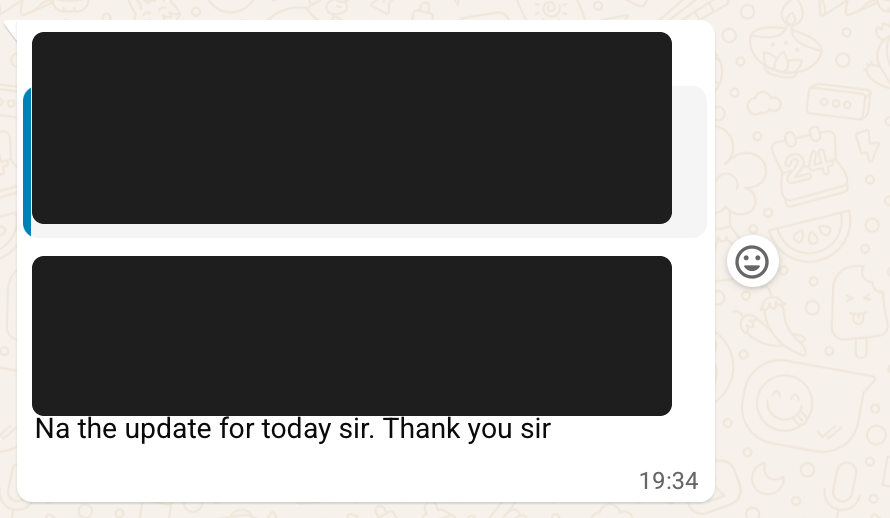
With the farm team, almost nothing changes. They just need to mention a new employee’s number in WhatsApp. They most likely have no idea they’re interfacing with an LLM. They send reports as they always have, often ending with the same polite sign-off, “…thank you sir.”
My process
This project perfectly reinforces how I think about AI. It’s simply a multiplier. It helped me shorten the time between noticing a problem and building a useful first version.
As more people now have access to this kind of leverage. I’m convinced the foundational principles of problem solving still come to play. A person can bring knowledge from their unique reality, and use AI to build something they could not have built alone.
AI makes building more accessible but judgment still matters. You still need to understand the problem, and keep the solution the right size.
With great power comes great responsibility.
My goal is for the farm to feel the same, just lighter. That, to me, is what good technology should do. Baálẹ̀ is still evolving. In the near term, I want to:
- Bring older paper records into the same system,
- Let my parents retrieve information through WhatsApp
- Help them flag unusual increases in feed use sooner.
The result
My parents are happy. They would say, “Ọmọ mi, tech guru! Ó ti ṣe magic,” which means, “My child, technology expert! You have performed magic.”
Honestly, the system underneath is less mysterious than it sounds. It is a Raspberry Pi running the application, a database, a spreadsheet, calls to OpenAI’s API, and a growing list of lessons from real use.
Still, I understand what they mean. I know I won’t always get moments like this, so I don’t take them for granted. I’m watching my parents grow a business and I get to build a small part of it with them.